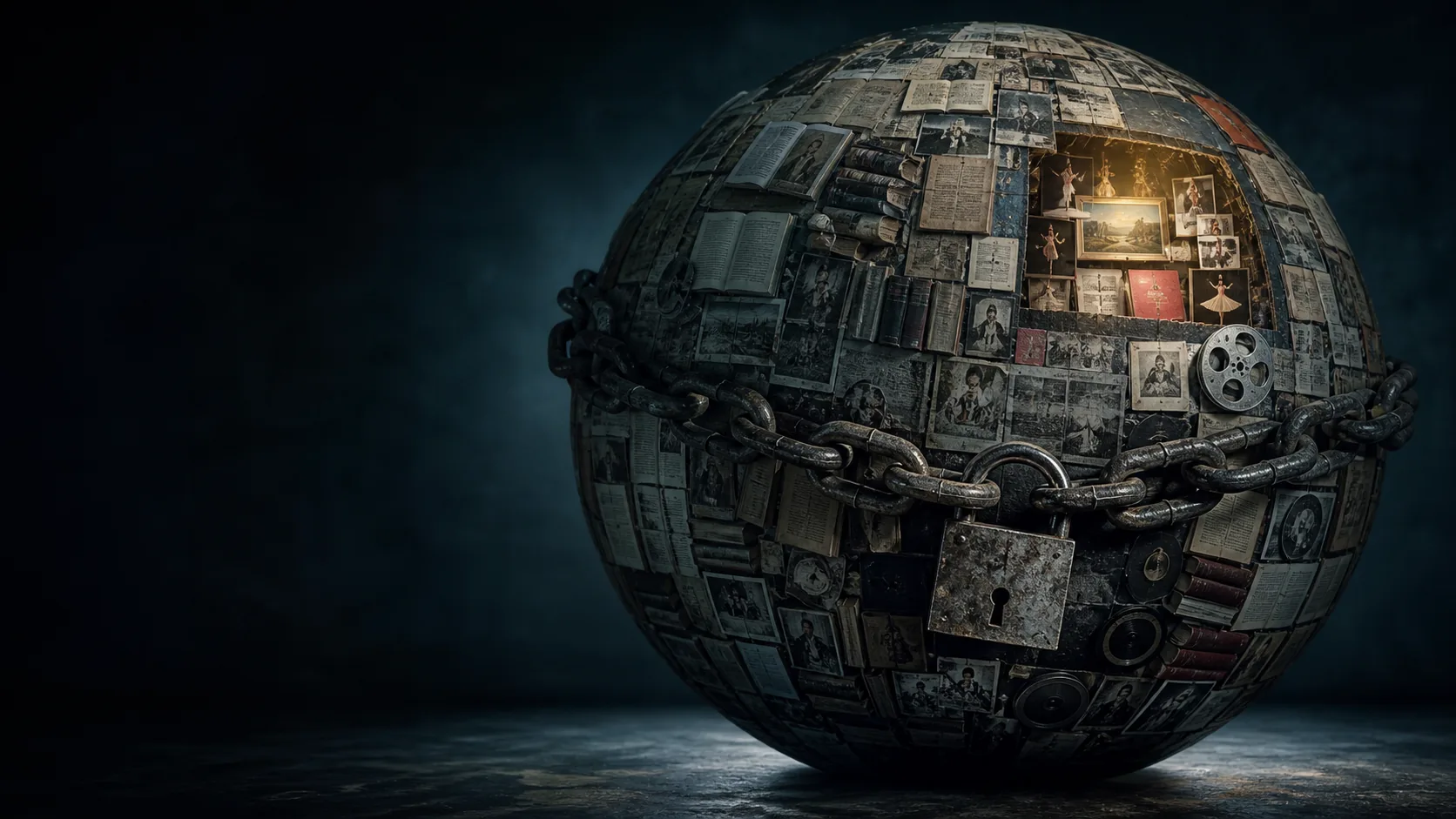
A globe made from cultural artifacts held by an iron chain and lock

A worldwide public-interest project

Our culture shouldn't have to wait.

Copyright extensions keep books, films, music and memory locked away long after their creators are gone.

Today's recordAugust 15, 2026

Canada's next expected intakeJanuary 1, 2043

Time added in 202220 additional years

Today's edition

Culture was delayed again today.

A live edition will surface verified works for each date. This prototype uses researched Canadian creators to show how that daily record could feel.

Canada 20 years added to the wait

Delayed cultural record

Margaret Laurence

Her literary works remain restricted until 2057 under Canada's current general term.

Died
1987
Previous term
Life + 50
Current term
Life + 70

Robertson Davies

Locked until 2065 Canadian literary works

Mordecai Richler

Locked until 2071 Canadian literary works

Irving Layton

Locked until 2076 Canadian literary works
0.33%estimated value of a 20-year extension at 7% interest
2.3%of sampled books from 1927-1946 still available from publishers in 2002
14%of sampled 1890-1964 sound recordings re-released by rights holders

Evidence figures are drawn from the project's Canada research draft. Full citations and methodology belong in the production evidence library.

An archival collection of books, film and records blocked by a chain and padlock

Nobody knows who owns it. Everyone is forbidden from using it.

The publisher closes. The creator dies. Records vanish. A library may be ready to preserve the work, but there is nobody left to ask.

That is cultural disappearance by paperwork.

Owner unknown Out of print Rightsholder not found Still locked
See what disappears

Copyright changes at every border.

Choose a country to see the general term, the change that shaped it, and the public-domain history behind the number.

Interactive prototype. General terms link to official government or intellectual-property sources.

North America

Canada

Public domain paused

Current general termLife + 70
Previous general termLife + 50

On December 30, 2022, the general term increased by 20 years.

Read the official term source

Diagrammatic locator map · Non-draggable

How the term changed

Important date January 1, 2043

The next year new author-based works are expected to enter Canada's public domain under the general rule.

Copyright does not only decide who gets paid.

It decides what survives, who can study it, and whether another generation gets to build on it.

Education

Students lose the primary record.

Libraries and educators face added cost, removal work, and reduced access.

Preservation

Restoration waits for permission.

Old film, sound, books, and photographs can decay while ownership remains uncertain.

Creation

New work loses its raw material.

Independent creators face barriers that large rights portfolios can absorb.

Access

Unavailable does not mean free.

A work may be impossible to buy and still illegal to preserve or distribute.

A sane alternative

Protect people. End cultural dynasties.

The proposal starts with the creator's lifetime, protects real dependants after death, and creates a clear path into the public domain.

Maximum after death50years
  1. Creator's lifetimeProtected
  2. Universal transition5 years
  3. Verified spouse15 years
  4. While spouse lives6 × 5 years

Dependent children are protected until age 25. If no spouse comes forward within five years, the work enters the public domain.

Understanding first. Action next.

Use the evidence, tell the story in your country, and help restore a meaningful public domain.

Select an action to preview how this area will respond.

Culture is an inheritance shared by everyone.

Someone wrote a story before we were born. Someone photographed a town that no longer exists. Someone recorded a voice whose owner has been gone for generations.

Those works become part of the record of who we were. Eventually, they are supposed to become ours. Not mine. Not yours. Ours.

The public domain is not where creativity goes to die. It is where culture gets another life.

Culture Delayed exists to count the lost years, put names and faces on what disappears, and ask a question that should not be radical: how long is long enough?

Travis MacDonald

Founder, CultureDelayed.org
I believe we can protect creators and families while remembering that culture has another destination: all of us.
Contact the founder
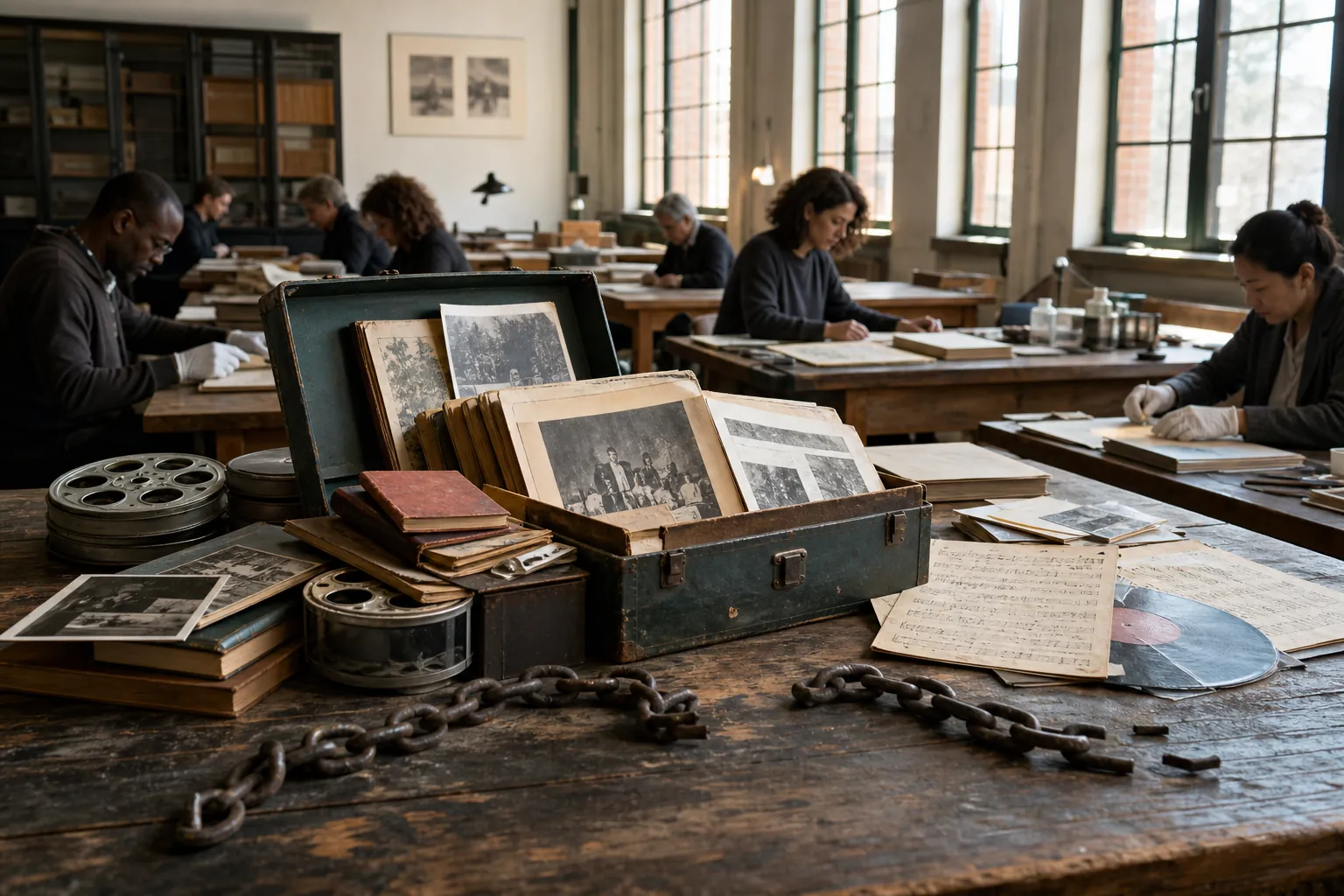
People restoring and studying cultural materials beside an opened chain

Culture eventually belongs to everyone.

Let's stop making everyone wait.

Take action